
Domino Duel - Online Dominoes
ZARIBA GAMES - Card & Board Games OnlineBoard
4.51.58K Reviews
- Version
- 1.54.2
- Installs
- 1.00M
- Age Rating
- Everyone
Screenshots



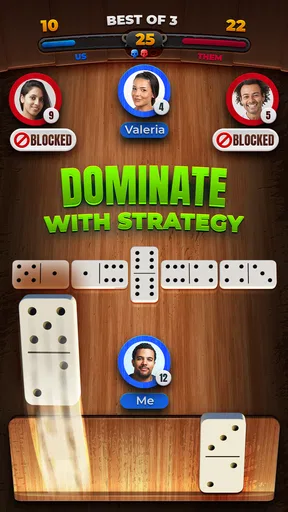




Our Review of Domino Duel - Online Dominoes
 Analysis by Appyee
I usually know within a few sessions whether a board game belongs on my phone for an afternoon or whether I will still open it weeks later. Domino Duel - Online Dominoes made a good first impression because it takes a familiar tabletop game and puts the important decision in front of me quickly: which tile should I play, and what am I giving away by playing it now? It is a free board game from ZARIBA GAMES - Card & Board Games Online, aimed at everyone, and its focus is online domino play rather than a complicated collection of side systems.
That simplicity is its biggest advantage. I do not need to learn a long rulebook or build a deck before I can enjoy a match. At the same time, the game is not completely mindless. The available modes—Block, Draw, and All Fives—give the familiar domino format different rhythms. My overall impression is that it works best as a short, repeatable game for people who enjoy making small tactical choices, not as a huge competitive platform that constantly demands attention.
Why the first week feels so accessible
The opening appeal comes from the low barrier to entry. If you already know ordinary dominoes, you can settle in almost immediately. If you do not, the basic visual language is still easy to understand: match the ends, manage your tiles, and avoid leaving your opponent an obvious route to score. I appreciate that the game does not need an elaborate fantasy setting to justify a round. The tiles and the board are the point.
Block mode is the cleanest place to begin. It rewards careful tile management and makes every playable move feel important because a poor choice can leave me without a useful follow-up. Draw mode is more forgiving when I get stuck, since the game allows the hand to develop instead of ending the decision at the first dead end. I find that difference useful when introducing the game to someone who is still learning the flow of dominoes.
All Fives changes the mental calculation again. Rather than focusing only on emptying my hand, I have to watch the exposed ends and think about scoring opportunities. That makes an apparently harmless move more complicated: a tile may fit perfectly but create a valuable total for the other player. This mode is where the game feels less like casual matching and more like a compact tactical contest.
A realistic use case is a short break when I have ten minutes and do not want to commit to a long campaign. I can play a few rounds, stop, and return later without having to remember a complicated story or a large inventory. It also suits a relaxed evening with a friend who enjoys classic games but does not want to install something visually noisy or mechanically overloaded.
The online focus gives the experience more life than playing against a fixed computer routine would. Human opponents make the same position feel different from one match to the next. One player may protect a suit aggressively, while another may spend tiles quickly and leave me guessing about what remains in hand. That uncertainty is valuable, although it also means the quality of a session depends partly on the opponent and the pace of the match.
During the first week, I would recommend switching between the modes instead of judging the whole game from one type of round. Block is useful for learning disciplined placement, Draw is comfortable when I want a less punishing session, and All Fives provides the strongest reason to keep thinking after the basic rules become familiar. The modes are not just labels; they change what I consider a good move.
The small decisions that matter more than they seem
One useful habit is to stop treating a playable tile as automatically good. I try to notice which numbers I am repeatedly exposing and whether I am keeping a flexible tile for later. In Block mode, preserving options can matter more than reducing my hand immediately. In All Fives, I also check whether my move creates a scoring total at the ends. That extra check is easy to forget when I am playing quickly.
Another practical tip is to use Draw mode as a training ground rather than only as the easy option. When I am stuck, the extra draw gives me time to observe how the board is developing. I can then carry that awareness into Block mode, where I have to plan more carefully around the tiles already visible. This makes the transition between modes more meaningful than simply choosing the one that feels least demanding.
I also find that the best opening move depends on the mode and the table position. A high-value tile may look attractive, but placing it can reveal a number that the opponent clearly wants. Holding a more adaptable tile for the next turn may be wiser, especially when I do not yet know which numbers the other player is trying to control. The game rewards this kind of restraint, even though the interface itself remains simple.
For a new player, the main learning curve is not the rules but the habit of reading the board. I would not rush to play every turn as fast as possible. Taking a moment to count the exposed ends and remember which numbers have already appeared makes the game more satisfying. It also helps separate a genuinely thoughtful loss from a match decided mostly by an awkward hand.
What keeps it useful after the novelty fades
The long-term question is whether dominoes can support repeated play without feeling like the same puzzle every time. In my experience, the answer is yes, but within a defined range. The three modes provide enough variation for regular short sessions, particularly if I enjoy improving my decisions rather than chasing constant new content. The game’s strength is repeatable structure, not endless novelty.
Month to month, I can see the appeal for someone who likes a dependable mental break. A quick match can become a small routine after work, during a commute break, or while waiting for an appointment. Because the rules stay familiar, the game does not ask much from me before I can start. That makes it easier to return to than a more demanding strategy game that requires remembering a build, a quest, or a large set of changing systems.
The online element is especially important for recurring value. Playing against other people keeps the decisions less predictable than a purely scripted opponent would. However, this also means the game is strongest when I want interaction and weakest when I expect a deeply controlled solo experience. If my priority is a rich single-player campaign, a puzzle progression, or a large collection of unlockable content, this is probably not the right board game for me.
The presence of All Fives gives experienced players a reason to stay longer than they might with basic matching alone. It asks me to think about both hand management and the score available from the ends. That dual objective creates a useful tension: sometimes the safest move is not the most profitable one, and sometimes a small immediate score is worth accepting a less comfortable position later.
There is also value in changing the pace deliberately. I might choose Block when I want a stricter test of planning, Draw when I am tired and want room to recover, and All Fives when I want to pay closer attention. This is a simple form of self-adjustment that helps prevent every session from blending together. It does not transform the game into a different genre, but it gives the familiar rules several moods.
Its audience size suggests that the format has found a substantial mobile audience: the game has passed one million installs, with an average rating of 4.5 from around twenty-eight thousand ratings. Those figures do not guarantee that every match will suit me, but they do indicate that this is not an obscure experiment with no established player interest.
The maintenance burden is light, but not invisible
From a player’s perspective, the maintenance burden is lower than in many modern mobile games because the core activity is immediately understandable. I am not managing a daily checklist, a complicated collection, or a long chain of upgrades. The current version is 1.54.2, and the game supports devices running Android 7.1 or later, which gives it a relatively broad technical reach for people using older compatible phones.
That does not mean the experience is entirely frictionless. Online play naturally depends on having a stable connection and on finding opponents who are willing to complete a match. A brief interruption can be more annoying in a competitive board game than in a solo puzzle because the flow depends on both players. I would choose a reliable connection before starting a serious session, especially when I care about the result.
The free entry point is convenient, but the game includes in-app purchases ranging from twenty-nine cents to one hundred twenty-nine dollars per item. I would advise treating the free version as the main test: play enough to decide whether the basic matches are enjoyable before spending anything. The presence of a wide purchase range is not automatically a problem, but it is a reason to keep a clear budget and avoid making an impulse purchase simply because I am already invested in a session.
For families, the Everyone content rating makes the game easier to consider as a general-audience board option. Even so, I would still explain the purchase side to younger players and use the device’s purchase controls where appropriate. The simple rules make it approachable, but online competition and optional spending are still worth discussing before handing it to a child.
One maintenance advantage is that the game does not depend on me learning a new rule set every few weeks. That can be a drawback for players who want constant events and fresh mechanics, but I see it as a benefit when I want a stable pastime. The trade-off is clear: less upkeep and less learning overhead also mean fewer reasons to return if I need dramatic change to stay interested.
Where fatigue begins
The first source of fatigue is repetition. Dominoes is intentionally focused, and that focus can become narrow if I play for a long stretch every day. The three modes change the decisions, but they do not erase the basic loop of placing tiles and responding to the board. I get more value by playing in short sessions than by trying to turn it into an all-evening marathon.
The second source is the emotional swing created by the starting hand. Skill matters, especially in how I preserve options and read the exposed ends, but not every position gives the same room to maneuver. A difficult hand can make a loss feel inevitable, while a favorable hand can make a win feel less instructive. I try to judge my play over several matches rather than treating one result as proof that I have improved or failed.
Online opponents can add variety, but they can also affect the atmosphere. A thoughtful opponent makes the game feel like a proper board-game exchange. A rushed or inconsistent session can make the same mechanics feel less satisfying. This is not a flaw unique to this title, but it matters more here because the social match is a major part of the appeal.
All Fives may also feel less welcoming at first than Block or Draw. The scoring logic adds depth, but it asks me to monitor more than whether a tile fits. I would not recommend starting there if I am teaching someone who wants immediate simplicity. Once the basic placement rules are comfortable, however, it becomes the mode I return to when ordinary dominoes starts feeling too predictable.
Another limitation is that this is not the best choice for players seeking a broad board-game library in one application. The identity is concentrated around dominoes, so someone who wants chess, checkers, card games, or a campaign-style strategy experience will need a different app. Its narrowness is precisely why it feels approachable, but it also limits its ability to replace a larger collection of games.
I would also skip it if I dislike competitive uncertainty or if I need a fully offline pastime. The game makes the most sense when I am comfortable with online matches and with the possibility that another person’s choices will shape the experience. For quiet solo relaxation, a dedicated offline puzzle may be a better fit. For a richer social board-game night, a physical domino set can still be preferable because conversation and shared presence become part of the activity.
Who will get the most from it
I think it is a strong fit for someone who wants a recognizable board game that starts quickly and offers more than one rule variation. It is also suitable for returning domino players who enjoy refining their play without having to study a large competitive system. The game can work for casual players, but the most lasting value goes to people who appreciate small advantages accumulating across repeated rounds.
It is less suitable for anyone who needs constant rewards, a narrative reason to continue, or a large stream of new content. The game’s recurring value comes from practice, opponent variety, and switching modes—not from a promise that every return will reveal a new world. Knowing that distinction before installing it prevents disappointment.
My most useful recommendation is to give each mode a specific purpose. Use Block to practice conserving options, Draw to understand how the board develops when a move is unavailable, and All Fives to sharpen scoring awareness. If I simply choose whichever mode is easiest every time, I lose much of the strategic variety that makes the app worth keeping.
My long-term verdict
After the first-week novelty fades, Domino Duel - Online Dominoes earns space on my phone as a compact, repeatable board game rather than as an endlessly expanding mobile hobby. Its free price makes trying it straightforward, its Everyone rating keeps the concept broadly approachable, and the three modes give the classic format useful differences. The developer, ZARIBA GAMES - Card & Board Games Online, has built the experience around a clear idea instead of burying dominoes under unnecessary complexity.
I would keep it installed for short online matches, especially when I want a familiar game that still rewards attention. I would not make it my only game if I need deep progression, offline certainty, or a constant stream of new mechanics. The purchase range also means I would play comfortably within the free experience first and decide later whether anything extra genuinely improves my routine.
My final judgment is positive but specific: this is a good long-term choice for disciplined, bite-sized domino play. It survives the novelty test because the modes support different habits and human opponents prevent every round from being identical. It does not survive that test for players who require broad variety or a substantial solo campaign. If you enjoy reading a board, protecting your options, and finding a few minutes for a focused match, I would recommend giving it a fair trial and judging it over several sessions rather than one lucky or frustrating round.
Verdict
Strengths of Domino Duel - Online Dominoes
- Quick online matches are ideal for short gaming sessions.
- Simple controls make the game accessible to beginners.
- Competitive play adds excitement beyond casual dominoes.
- Online matchmaking helps you find opponents easily.
- The familiar rules make it easy to start playing immediately.
Limitations of Domino Duel - Online Dominoes
- Match quality can depend heavily on your internet connection.
- Playing against experienced users may feel difficult at first.
- Online features may become repetitive over extended sessions.
- Some players may dislike competitive pressure during matches.
- Availability of opponents can vary depending on the time of day.
Similar Picks in This Category
View All
Ludo King®
Gametion4.1

Ludo
Yarsa Games4.6

Tile Master® - Matching Game
Higgs Studio3.6

Checkers Online
CC Games4.6

Dominoes
Loop Games4.7

Chess
Chess Prince4.6
Frequently Asked Questions
What is Domino Duel - Online Dominoes?
Domino Duel - Online Dominoes is a digital domino game focused on competitive matches against other players. After installing it, you can learn the basic rules, arrange your tiles, and play turn-based rounds through a mobile-friendly interface. It is designed for people who enjoy classic dominoes but want the convenience of playing quick matches on an Android or iOS device.
Can I play Domino Duel - Online Dominoes with friends?
The game is primarily built around online competition, so it is suitable for challenging friends or other players through connected matches. Depending on the current version, available modes may include private games, invitations, or matchmaking with random opponents. Before downloading, check the store listing and in-game menus because multiplayer options, room systems, and friend features can change with updates.
Does Domino Duel - Online Dominoes require an internet connection?
An internet connection is generally needed for the main online gameplay experience, including matchmaking, synchronizing turns, and recording results. This means Wi-Fi or mobile data is recommended for reliable matches. Some versions may offer limited practice or offline functionality, but you should not assume that every mode works without connectivity, particularly if the game depends on online accounts or live opponents.
Is Domino Duel - Online Dominoes free to download?
Domino Duel - Online Dominoes can typically be downloaded without an upfront purchase, although the exact pricing model depends on the version available in your region. Free games may include advertising, optional purchases, or premium items. It is worth reviewing the store page before installing, especially if you want to understand whether ads, subscriptions, virtual currency, or other in-app payments are included.
Is Domino Duel - Online Dominoes suitable for beginners?
Yes, the game can be a good choice for beginners who already know, or want to learn, the fundamentals of dominoes. The digital format makes it easier to follow turns and available moves than a physical set. However, online opponents may have very different skill levels, so new players should use any tutorial, practice mode, or introductory matches available before entering more competitive games.
Play our best games!


